

For better or worse, covid turned out to largely benefit the behavioral health space. Local is still king. Telehealth is less impressive than many executives suppose. Shady operators and bad business models have rebounded rather than dying out. MAT is slowly integrating with traditional rehab. Recovery capital is still missing from the treatment equation.
These are just a few of the trends coming out of 2020. Every year here at Circle Social, we do an overview on the state of the industry based on what we’ve been seeing. We’ve continued to grow ourselves with over 20 full-time staff, more than 2 billion dollars worth of behavioral health data, and our pulse on providers big and small. We’ve also expanded significantly into the field of acute psych, which we’ll compare and contrast with the addiction treatment space in this report.
With all our data combined with our qualitative knowledge of the space, this article will provide insights into what’s working and what isn’t.
Covid & Lockdowns Drove Behavioral Health Needs
In early March, our phone started ringing and providers were nervous. States were implementing lockdowns across the nation, the stock market was plummeting, and London’s Imperial College was predicting covid to overwhelm the US in a matter of weeks.
By the end of March, things looked very different. We track an average of 965,000 visitors to our clients’ websites and 21,100 inquiries per month. That volume barely dipped for a bit in mid-March and, from there, actually started climbing. While there was definitely a scramble to get telehealth options in place, particularly for outpatient levels of care, our addiction treatment clients were seeing climbs in census. Acute psych was different, but we’ll get to that in a bit.
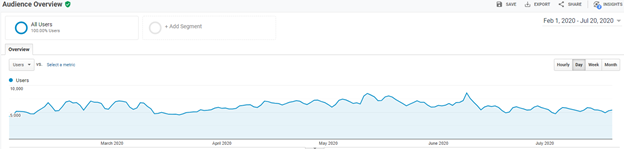
As the pandemic progressed, this trend remained steady. Why?
- Some programs did close down permanently or temporarily. This meant that the same call volume was being transferred to fewer providers.
- People had time. We saw an influx of hospitality, restaurant, and construction workers, professions that normally had a very hard time getting off. Suddenly finding themselves with a lot of time, they made the decision to seek treatment.
- Families were spending a lot more time together. It was much easier to notice a problem or for problems to escalate.
- The lockdowns drove a lot of isolation and uncertainty while covid also drove a lot of uncertainty and fear. This pushed many more people to use or use more heavily. Since the start of the pandemic, rates of anxiety have doubled, rates of depression have tripled, alcohol sales are up by 32%, overdose deaths are up 50-98% depending on the state, and many places have seen a significant increase in suicides compared to last year.
While there is often a lot of emphasis in our field about the biomedical drivers of addiction and mental disorders, environmental stressors have a very significant impact on people’s behaviors. More and more people were suffering with a level of severity that required professional help.
Acute Psych Was Not As Fortunate
We mentioned that acute psych did not see the same influx of patients. In fact, many acute psych hospitals saw a drop in their census. Why the opposing trends?
- Acute psych has always been very referral dependent, particularly with a small handful of key hospital referrants. Hospitals had completely walled themselves off, turning away both business development reps and most patients seeking care. Patients themselves also became fearful of going to the hospitals as they saw them as hotbeds of covid.
 This lack of diversification in marketing and outreach made acute psych hospitals vulnerable to critical drops in census.
- Related to an overreliance on referrals, acute psych has rarely engaged in direct-to-consumer marketing whereas addiction treatment providers have invested heavily in such strategies. This has created a consumer base that knows where to go to seek treatment. Heavy investments in SEO also make providers very easy to find. Most acute psych facilities lack both a direct to consumer marketing strategy and an SEO strategy.
Addiction treatment providers spend anywhere from 8-12% of revenue on marketing. Most acute psych hospitals spend less than 3%.
For a deeper dive into acute psych’s opportunity to improve DTC marketing see the articles What Can Psych Behavioral Learn from Big Pharma Marketing and Why Are Psych Hospitals So Bad at Making Money.
How Do Providers Position Themselves for the Rising Wave of Mental Health Needs?
This trend of increased incidences of mental health and addiction issues will only continue. Early on in the pandemic, the team here at Circle Social did a deep dive into research on comparable situations such as wars and natural disasters. It became abundantly clear that each major disaster leaves a trail of trauma and disorder in its wake.
People who never had issues before or only had minor issues suddenly develop severe disorders and addictions. They don’t know where to turn, but most often end up in their family doctor’s office, an emergency room, or at a community behavioral health center. These facilities are not equipped to deal with the demand or the severity of the need, so end up referring out.

As we’ve been telling our clients for some time now, smart providers are already out there building relationships with these referral partners, and we’ve already started to see increased referrals coming in from these sources. You can read our full analysis on Covid-19 and Implications for Behavioral Health Providers in Unprecedented Times here.
Telehealth Isn’t the Opportunity Most Think It Is
A major trend that came out of the pandemic was the pivot towards telehealth. Payers had reduced interstate barriers to licensing and reimbursement, many patients were more comfortable seeking treatment at home, and the setup was fairly easy.
Shortly after this transition to telehealth, we suddenly had many CEOs reaching out to us and inquiring about expanding their marketing to reach more people in order to offer them a telehealth program. The thinking went that they could now become a state-wide or national program.
We stated that this was unlikely to be the opportunity they thought it was. We have a number of clients for whom we’ve marketed telehealth programs for a long-time pre-covid, and we’ve also run extensive campaigns for some online only programs. Patients, by and large, don’t want to do behavioral health or addiction treatment remotely. They want to connect with people face to face.
Some executives argue that a cultural shift is taking place and people will be more open to or even prefer telehealth going forward. We do not see this in any of our data. While more people than previously are taking advantage of telehealth programs, most of our providers’ patients are still coming in face to face in states where covid rates have fallen.
Even larger national behavioral health providers like Lifestance, that pushed heavily into the telehealth space before many others, still see the majority of their patients requesting in-person counseling.
Telehealth also doesn’t drive growth for a couple other reasons:
- The payers want patients connected to a community of care. It is advantageous when your therapist can also refer you to a good local pharmacist, addiction treatment provider, PCP, or other specialist. The payers know that patients connected to their own community of care do better. There is more collaboration, it’s usually cheaper, transport is less of an issue, etc.
- The more people you market to, the more expensive it is. Marketing to a million people in Indianapolis is cheaper than marketing to 6.7 million people across the state is cheaper than marketing to 330 million people across the country. Taking a $25,000 a month marketing budget and turning it into a $150,000 a month budget so you can reach the entire state is a pretty significant jump.
- Reputation, competition, and awareness are critical to marketing success. If someone sees an ad saying that they can call and order a $30,000 SAIC automobile and they’ll deliver it to their house, what do you think the likelihood is of the person picking up the phone to make that purchase rather than driving to their local Ford dealership downtown to buy a new car?
People are far less likely to buy from a company they don’t know and are also less likely to buy from a company far away when they have a good option close to home. In order to succeed in any new market, whether you’re selling cars, mental health services, or number 2 pencils, you need to spend time building up a reputation in that market. Most people are familiar with the old adage that consumers need to see a marketing message at least 7 times before they take action. Local competitors have likely already hit that 7-message threshold while any new entrants are starting from scratch. So not only are you paying more money to reach new people in a new market, you’re also paying more money to reach them more times.
- Competition drives up costs. The more people competing in an area, the more expensive marketing costs are. If you suddenly go from two providers marketing in a given area to twenty five all marketing telehealth services, the end result is higher costs to connect with fewer patients.
Finally, how do you differentiate a telehealth program? No one has satisfactorily answered that question yet. Why would a patient prefer one provider over another? How do you truly gain market share by geographic territory?
In addition to the hundreds of thousands of dollars we’ve spent on telehealth campaigns pre-covid, we still had some clients wanting to throw a lot of money at them during covid. From our experience both pre and during covid, we can definitively say that telehealth is not a magic engine for behavioral health provider growth.
Ultimately, full-on telehealth services are not a preferred entry point for most patients. While there has been some change in consumer preference, it has not been significant as evidenced by the patients flocking to brick and mortar programming as soon as they feel safe enough to do so.
The Opportunity for Telehealth
Where this is an opportunity for telehealth is in step-downs. Patients moving from an inpatient to less intensive form of care can absolutely benefit from step-downs to telehealth. This enables them to go back home, but continue with the same provider even if that provider doesn’t have an outpatient facility in their hometown. Providers should be able to increase successful step-down rates by at least 10% using telehealth options.
There is also an opportunity for an initial entry point into telehealth problem-solving or free support groups. While most people are reluctant to engage in formal counseling with telehealth as the starting point, many are happy to ask introductory questions like, “How do I know if I have a problem” or “I’m stressed out at work and need someone to talk to, can you help?” While these are non-reimbursable conversations, they do provide a potential point of entry.
Community Integration Is Critical to Success
While some providers are still trying to make the fly-away or pure OON model work, none of them have been able to do so in a way that is anywhere close to scalable.
We’ve also been surprised this year by the number of shady or poor quality operators still out there up to the same old tricks. Many fold, only to be replaced by someone else trying the same thing. Others simply remain small enough to fly under the radar.
These are usually programs heavily reliant on OON-only benefits. Whether it’s partnering with questionable online “influencers,” horse-trading referrals, employing young kids to poach patients from AA meetings, relying on third-party call centers, hacking GMB profiles, or other unsavory practices, the bad apples are still out there.
However, most large operators still around have partnered with PE firms and brought in a much higher level of talent, compliance, sophistication, and capital.
There are certainly still some providers with poor balance sheets following a mantra of growth at all costs. The field was plagued by bad precedents of some private equity firm or strategic buyer paying 12X multiples for programs held together with glue and duct tape. These acquisitions were sold on the fluff story of a 45 billion dollar growth industry and books filled with smoke and mirror metrics that less knowledgeable buyers fell for. This is why we still see some providers opening up new facilities while bleeding a million dollars or more a month. They’re hoping to sell out their zombie corporation before anyone cottons on to the fact that they’re mostly bloat. While it’s a business model that did work for a lucky few, buyers are more informed and wiser, so these kinds of sales are unlikely in the future.
The providers with real growth and success, of which we’re proud to number many among our clients, are focused on quality programming, strategic expansion, and books that match the reality of what they’re building.
Local Is Still King
As we’ve pointed out in reports from previous years, the trend is still local. While we see close to a million hits a month from all over the country across our client websites, what percent of web hits actually turn into patients that come from farther than 100 miles away? With a few exceptions from those who have highly specialized programming, the answer is less than 5%.
We have had a number of clients that have been full for months with waiting lists this year. Almost all of their patients came from the communities they operate in, most of the time from the main metropolitan area they are closest to.
Just like with telehealth, payers want patients integrated into a local community of care. Patients want somewhere local that they’ve at least heard of, is within driving distance, and won’t cost them even more money in travel costs.
In an additional bonus to providers, it’s significantly less expensive to market in a smaller area than a larger one. So not only do you attract more patients by focusing locally, it costs you less to do so.
The hub and spoke model where a hub residential program in the state or a geographic area is supported by spoke outpatient programs in surrounding cities. With Google’s continued push for local SEO in the algorithm and the advantages of keeping business development territories smaller, this model allows for solid, consistent growth across a full continuum of care.
Strategic site selection requires a lot more than just taking a look at the reimbursement rates. You need to understand:
- Which zip codes provide higher reimbursements, because payers look at the location of the facility, not where patients are coming from, to determine rates in a state.
- What is competition like? How many patients can they serve and what’s their reputation in the community?
- What’s the population size, income level, and reasonable travel radius for the facility?
- Is there a talent pool to hire from?
- Who are potential community linkage and referral partners, and how many are there?
What’s Missing from Clinical Care?
Competition is very much on the rise in many areas of the US. New Jersey, Florida, Arizona, Orange County, CA and Denver, CO are all overly saturated markets. There has been an explosion of growth into the Northeast and the Midwest. Providers are even pushing into notoriously low-reimbursement markets like Oklahoma. Here in Indianapolis, where we used to have only one non-profit provider, we now have seen 5 new programs come in this year, more than quintupling our bed count.
Acute psych hospitals are seeing the same. Not too long ago, you’d only have one psych hospital in a metropolitan area. Now there are sometimes four or more. Behavioral health has really exploded as a popular business model, driving supply up while demand was relatively flat pre-covid.
So if there are fewer patients than there are beds, how do you ensure the patients choose you? It really comes down to differentiated clinical care, and, related, reputation both in the community and online.
We go into a lot of programs across the country each year. Here is how most programs look in action:
- Therapist starts group with 10-15 people and opens topic for the day. Each person talks for 5 minutes about the topic, or one person talks for 30 minutes and the rest of the group talks for 2 minutes or less. Group ends.
- Therapist checks on topic for the day. They Google the topic and print off copies of a story or activity they like. Therapist has patients take turns reading off the handout. Short discussion follows where, again, each patient has less than 5 minutes to talk until the hour is up.
A further issue here is that each therapist brings their own eclectic clinical philosophy to each group. It’s very rare for us to see a consistent clinical approach implemented by different clinicians at the same provider.
In a conversation with Roger’s Behavioral Health, they told us about an initiative they took to standardize their clinical curriculum, providing both training and quality assurance through regular supervision that had all therapists leading groups with consistent approaches and approved modalities. As they heavily track outcomes data, they were able to see a significant improvement in patient outcomes just by standardizing core elements of delivery.
When Will We Have Outcomes?
Which brings us to clinical outcomes tracking. There has been a lot of talk related to outcomes the past couple years. A number of providers have either created their own internal tracking processes, like at Gateway Foundation, or partnered with third parties like Summit BHC with TRAC9.
The bottom-line is that providers need to get started. Anything is better than nothing. More importantly, the data gathered from outcomes tracking can then be used to create feedback-informed care models that tell you which programs work best with what patients, which clinicians deliver the best care, and what provider risk is as it relates to value-based care contracts.
Thinking Outside the Treatment Walls
The biggest gap in the provision of both mental health and addiction treatment is that of recovery capital. Recovery capital is an umbrella term that encompasses everything from vocational skills to the formation of community support networks to belief in self.
Most treatment programs focus heavily on the individual as the patient relates to their own mental health or addiction struggles. But much of recovery is dependent upon a patient’s ability to succeed in life in general once finished with treatment. Can they find and retain employment? Can they successfully obtain a degree or professional certification? Do they know how to budget and manage finances? Do they have the communication and emotional regulation skills to get along with others or garner support from family and friends? Do they believe in themselves and have simple skills like how to set incremental goals?

Most providers have known this for quite some time, but the question always comes down to, “How do we get paid for it?” Nothing in healthcare is sustainable if there’s not a financial model behind it. The best answers currently are extending into outpatient models or adding on peer recovery support, both of which are reimbursable.
The challenge here is that logistics surrounding managing a lot of weekly short-term contact with patients is complex and hard to make profitable. For those providers that can figure it out, it becomes another revenue stream while also improving patient outcomes, which, in turn, drives revenue through positive reputation.
There are also opportunities to provide recovery support in less structured formats such as alumni groups or recovery apps as well as partnerships with other community providers that may offer such services.
The Expansion of Mental Health Services
There are at least four times more people in the US struggling with mental health disorders than are struggling with addiction. As we know, there is also often overlap between these two issues. For standard outpatient services, we have clients admitting over 1,000 patients a week in major metropolitan areas. The demand for low-severity mental health services is extremely high with a smaller portion of demand for higher severity.
Delivery of care has similar foundations for addiction versus mental health, so many providers of one service can also deliver programming and care for the other. Payers have also opened up on this and we’ve seen some states even drop the need to declare whether a patient is “primary” mental health or “primary” addiction.
All providers should be asking themselves the following questions to create a superior program:
- What do we excel at clinically that no other program in our area excels at?
- How do we standardize clinical philosophy and quality of program delivery while also leaving room for our therapists’ strengths to shine through?
- What outcomes are we tracking and how are we using them to create a feedback loop between patients, clinicians, and leadership that continuously improves care?
- What tools, techniques, and support structures do we have in place to help patients build recovery capital both in our program and after they leave it?
The Integration of MAT
As recently as 2018, MAT was still a dirty word and it was extremely difficult to find a treatment provider open to offering it. About halfway through 2019 and most of last year, we suddenly had traditional rehab clients start integrating it into their treatment programs.
This was often initiated by leadership, and push back from both staff and referral partners has not been uncommon. But demand from patients for this kind of offering has risen sharply. This integration of MAT has developed alongside a general softening of one-size-fits-all approaches to treatment. Two years ago, providers we consulted with either offered AA or SMART, never both. Nowadays, it’s uncommon to go into a provider that doesn’t at least make both an option along with others such as Refuge or Celebrate.
The field has largely woken up to the fact that there are many pathways to recovery. Here at Circle Social, we do a weekly training/discussion around an area of behavioral healthcare. Last week, we compiled a number of patients’ comments on MAT. Some said it saved their life. Others said they hated it more than the opioids they were originally addicted to. It was an excellent discussion highlighting the multiple pathways approach.
When we go to the doctor, there is often a trial and error approach. If treatment X doesn’t work, come back and we’ll try treatment Y. It’s a very normal process in standard healthcare that we’re all used to. This practice is starting to infuse behavioral health as well, which we think is a good thing.
Stand-alone MAT programs continue to expand across the country as well and there will definitely remain a place for those, particularly serving the Medicaid community, but patients are more often seeking integrated care for opioid addiction now and we’re even seeing payers interested as well due to the cost savings incurred from having the different treatment options all in one place.
The Opportunity in Medicaid
Most psych behavioral facilities bring in much of their revenue from Medicaid. However, they are getting reimbursed at rates 3 or 4 times higher than what Medicaid pays for inpatient addiction treatment. Acute psych facilities also have much shorter lengths of stay, so the total cost to the payer is significantly less.
While addiction treatment providers are unlikely to ever get anything close to acute psych rates, there is tremendous opportunity, particularly in the SUD space, to serve Medicaid recipients. According to government data, only 0.9% of commercially insured individuals use their commercial policies for SUD treatment and only 0.6% for AUD.
Of the commercially insured that activate their addiction treatment benefits, 85% or more of them use it for counseling with a private therapist, not for residential or intensive levels of treatment. If you run the numbers on this, you find that there are likely to be only 41,600 people across the US looking for intensive outpatient to residential levels of care in a given month. There are currently far more beds and intensive outpatient openings in the US than people seeking that level of treatment, which is one reason why many programs struggle to keep census up. With that said, there are still areas in the US that are underserved, so pockets of opportunity remain for new programs.
If we look at Medicaid, 7.6% of those insured by Medicaid use their policies for SUD and 1.6% for AUD. That means there are nearly 6 times more people on Medicaid seeking addiction treatment services than those with commercially insured policies.
While this doesn’t matter much for the small providers with a single location as they can operate sustainably off of the small volume of commercially insured patients, for those providers looking to grow into state-wide, regional, or national operators, these numbers are something they need to be seriously considering.
The average MAT clinic sees upward of 800 people a month coming from a 10-mile radius around their facility. This is in stark contrast to the 30-bed residential that struggles to fill beds from a 150-mile or greater radius. When you look at those comparisons, you start to understand the opportunity.
Reducing Cost Structure
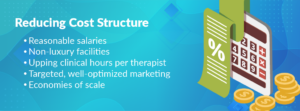
The main barrier here is that the majority of providers have a cost structure that is too high to support profitable Medicaid rates. Most providers have a residential cost of $500 per day or higher, whereas it generally needs to be under $300 to support Medicaid.
This then can create problems for the model overall. Just as some providers have refused to accept in-network contract rates because it reduces their ability to deliver higher quality care, the same is true when accepting Medicaid.
What are some ways to reduce cost structure?
- Reasonable salaries. Most business development, marketing, and call center professionals were overpaid in the field for a long time. There are still programs paying 6-figures for call center reps. This simply isn’t sustainable on today’s in-network rates, much less Medicaid. Formalized, consistent training is one way to improve call center metrics that doesn’t require high salaries.
- Non-luxury facilities. Making a Medicaid model work requires normal facilities with at least 2 people per room.
- Upping clinical hours per therapist. If a program is structured right and clinicians are adequately supported in programming creation and delivery, clinicians should be working upwards of 25 clinical hours per week.
- Economies of scale. Multiple facilities make hiring a full-time medical director or psychiatrist feasible.
- Targeted, well-optimized marketing. Most facilities we first go into are still paying 5 times more than they should be as a cost per admission. We’ve gone into facilities paying 10 times more than they should be off of some channels.
Reputation (brand) also drives down search costs and, therefore, cost per admission. Patients are more likely to call and more likely to admit from a call when there are good online reviews. Community reputation and number of quality referral partners reduces the need to spend on outbound marketing. Really good marketing drives census up while also reducing costs over time.
Next Steps for 2021
Outside of covid, most of the major 2020 trends have carried over into 2021. Demand has remained high and will continue to increase as covid related fallout drives mental health and addiction struggles, particularly in underserved areas.
Opportunities in both behavioral health and addiction treatment are narrowing as both new and established providers expand into new territories. At the same time, extensive opportunity remains for differentiated providers as well as in the Medicaid space specifically for addiction treatment. There is also an increasingly blurry line between traditional rehabs, MAT, and mental health services.
Circle Social Inc is a growth consulting & marketing agency that helps behavioral healthcare organizations connect with patients and their communities to grow their census. We specialize in value-driven organizational growth that connects patients, communities, and care providers in meaningful ways. We can be reached at engage@27aa2dbd3f.nxcli.io or 800-396-9927.