Results Analyzed
- 23% lead form completion rate
- $37 cost per lead
- 1.1% clickthrough rate
At Circle Social we are passionate about connecting patients to quality care within the substance use disorder treatment (SUD) and mental health (MH) services sectors. For most people, this brings to mind the act of directly connecting clients to care. However, there is an entire segment of companies who serve those who serve patients directly.
The behavioral health industry just like any other sector needs support services such as electronic health record systems, customer management systems, and therapy delivery systems. There are large organizations like insurance carriers, managed care organizations, and state and local health departments that also serve those living with SUD or MH challenges. All of these important industries play a part in supporting the delivery of quality care to patients in the $91 billion behavioral healthcare industry.
When a company develops a new product for the SUD or MH market segment digital advertising should be a part of their growth strategy. The problem is many agencies think of this as only direct response advertising, which traditionally will yield a much higher cost per acquisition without an accompanying top-of-funnel strategy.
When considering online advertising the top-of-mind channels are Google, Facebook, Twitter, or Instagram. The problem? Big decision makers do not utilize these platforms as much. Sure those platforms are great for D2C and limited retargeting, but there is another platform you may not have considered.
Where are all of these professionals, executives, and decision-makers online? The answer is LinkedIn. LinkedIn is the best platform to reach high-level decision makers within organizations both large and small. Not just because they are on LinkedIn in a professional capacity, but also because they actually have an expectation that they will be presented with relevant information, products or services while they are on the platform.
By following a natural funnel process real, targeted, and inexpensive leads can be generated in a short amount of time on LinkedIn.

The Case
A startup that specializes in addiction treatment delivery via technology approached Circle Social. Their goal was to get their product in front of large organizations, like insurance carriers, managed care providers, and state and local level health departments.
The criteria for their ideal customer was that they could implement their product to a large number of members of their community and that the company itself would be reimbursed at a sufficient amount to meet their revenue goals.
The Client
CS analyzed this company’s product offering, existing customer base, and target customer and came to the following conclusions
- This company had a product nobody else was offering that was based on simple evidence-based techniques delivered via a patient’s mobile device.
- The company had extremely strong investors and founders with well-known name recognition in the field of SUD.
- There was a plethora of data and years of research around the efficacy of this client’s therapeutic approach.
We knew that, despite these trustworthy factors, a direct response campaign type would not work for B2B. Awareness had to be first, then trust building. This client’s sales process for these large-scale implementation is incredibly long, so weeks or months of nurturing is necessary.
The Audience
Circle Social along with the client developed a funnel campaign strategy for LinkedIn. LinkedIn has very good audience matching abilities for awareness campaigns. Additionally, LinkedIn’s contact matching is also very effective for list matching and retargeting using insight tag audiences.
Professionals do have a certain expectation of seeing ads for products and services on LinkedIn, however, LinkedIn as a platform also understands the importance of quality advertising over quantity of advertising. They even codify this into policy by limiting ad frequency per advertiser to one ad version every 48 hours, or up to four different ads from the same advertiser if that advertiser is running multiple ads.
This quality over quantity approach is exactly what decision-makers need to take the next steps. They want useful, targeted content in limited amounts.
The Campaign
After understanding our client’s offering and unique selling points, as well as their ideal customer, we at Circle Social were confident that we could build a successful campaign that drives business results. We did this by developing a plan for a series of comprehensive guides. Not just one or two, but a series of six guides and white papers released over six months. (Remember this client’s sales process is very long for B2B).
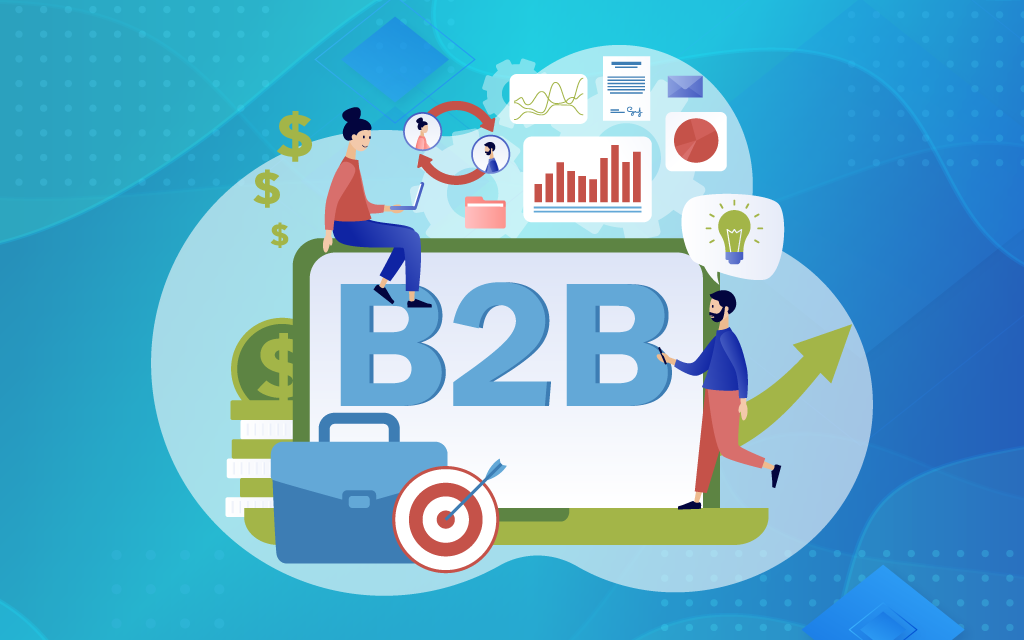
The first guide we created was 26 pages. Yes, that is a lot of info and a ton of work. But we know that offering free information is one of the best ways to build trust with potential customers.
Then we offered this guide on LinkedIn through a lead generation campaign to our highly targeted audience. We expected a cost per lead of around $250-$300 for the first campaign. Usually these campaigns take time to optimize and many ad variants to hit the message right. We were pleased to see that the cost per lead after one month was only $40. Not only was the cost per lead phenomenal, but the leads themselves were right on the money for the organizations we wanted to reach in our strategy.

Without sharing actual lead data here, we can tell you that the companies these leads were coming from included
- State and local health departments
- Insurance carriers
- Hospital systems
- Large for profit treatment centers
- Universities
- Managed care organizations
This campaign is just one example, but we have repeated this strategy several times for different providers. Here are two more clients who took our recommendation to use a similar approach.


Key Takeaways
- Based on client data, LinkedIn is a highly effective channel for B2B marketing for industries who want to reach decision makers in both treatment centers as well as government and non government organizations who have access to many members with an SUD or MH diagnosis.
- Results can be accomplished quickly on LinkedIn with the proper message and audience targeting.
- Results are repeatable and similar strategies work again and again.
What You Can Do
Develop guides, white papers, and case studies, offer them for free with no sign-up required. Deliver these to a large, but targeted audience. The size should be between 50,000 and 500,000 but no larger.
- Create step by step guides, or studies that are high info and education and low on pitches. Gate Lock and require contact info to access. Retarget these to the folks who saw your first campaign.
- Retarget all of these audiences with a demo request or appointment CTA after they have seen sequences one and two of your campaign.
- Longer funnels also work, especially for larger budgets or longer sales lifetimes.
- Front load, or load the top of the funnel heavy to get results quickly.